RVATotes Blog
When Moving Totes Might Not Save You Money

Renting moving totes can be useful without being the cheapest option for every move. The honest question is not whether a reusable container is convenient. It is whether the work it changes could reduce costs that you would otherwise pay.
Sometimes those are different things. Avoiding box preparation at home may simplify your week while leaving your mover’s invoice unchanged.
RVATotes is a moving-tote rental company, not a moving company. Customers arrange moving labor and transport of their packed belongings separately. Before renting containers to pursue a lower moving bill, consider these situations.
Your Move Is Already at the Mover’s Minimum
An hourly agreement may include a minimum charge. If your move is already being billed at that minimum, finishing sooner may not reduce the amount due.
The basic relationship is:
Billable hours = the greater of the actual billable time or the minimum billable hours.
That means reducing time below the minimum does not necessarily reduce the hours charged. Billing increments can also limit how a smaller time difference appears on an invoice.
Minimums are not identical across companies or services. For example, RVA Movers’ pricing page, checked November 25, 2026, lists different minimums for full-service and labor-only work. Use your own written agreement rather than assuming a general rule applies.
Ask the mover what time is billable, what minimum applies and how partial hours are handled. Those answers matter before any savings estimate.
Your Quote Is Flat-Rate or Based on Weight and Distance
A faster finish does not automatically change a fixed-price agreement. If the mover has quoted a total for an agreed scope, changing your container system may leave that total exactly where it was.
Likewise, if a long-distance quote is based mainly on shipment weight and distance, an hourly time-saving calculation is not the right way to predict the invoice.
Ask how your packing choices affect the written quote, if at all. Confirm that the mover accepts your intended containers and clarify arrangements at both ends before renting.
The label local or long-distance is not enough on its own. Read how that particular job will be billed.
Most of the Work Is Furniture Handling
Consider a move dominated by sofas, dressers, bed frames or other large pieces. A different container for smaller belongings does not remove the need to move the furniture.
Access may remain the bigger issue: stairs, a long carrying route, narrow spaces or the arrangements needed for bulky items.
Totes may still help organize the household contents that do need packing. But it would be misleading to treat the entire job as if it consisted of carrying containers.
List the work your movers will actually perform. If only a small portion involves packed household items, keep expectations for container-related savings modest.
Everything Is Already Properly Packed
If your belongings are already in sound, suitable containers, switching systems can add a new task: unpacking and repacking.
That is especially relevant close to moving day. A rental does not undo preparation you have already completed, and a new system is not automatically an improvement simply because it is different.
Check what still needs packing. You may need containers for remaining items rather than a complete replacement for the boxes already ready to move.
If you are uncertain about a packed item’s suitability, ask your mover for guidance. Base any repacking decision on the actual condition and protection required, not a blanket claim that every existing box needs replacing.
The Rental Costs More Than the Costs It Avoids
A possible reduction in mover labor is not the same as a reduction in the overall moving budget.
Compare the complete rental cost and applicable checkout charges with the boxes and supplies you would otherwise need. Add any genuine change in mover charges only when the mover’s terms support it.
If you already own suitable packing materials, your alternative supply cost may be small. If no billable labor changes, there may be no monetary saving to offset the rental.
You can still choose a service for convenience. Just keep that choice separate from a claim that it pays for itself.
Our moving-bill savings guide explains the distinction between household preparation, billable mover time and overall costs.
Convenience Can Still Be Worth Considering
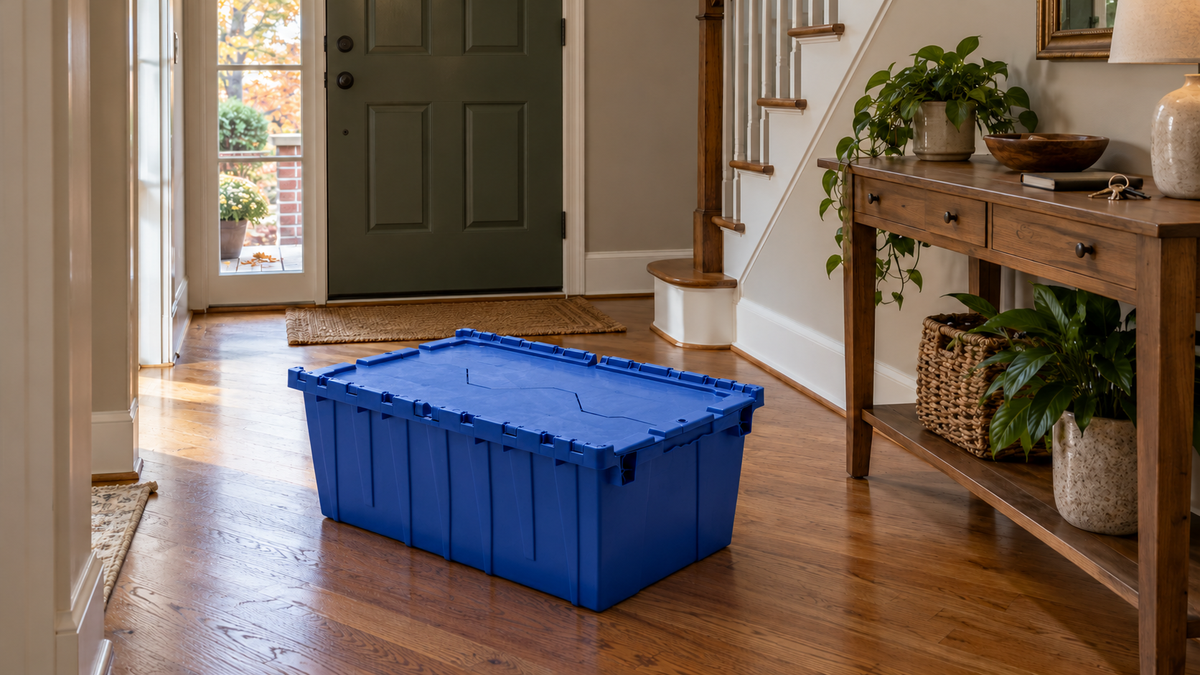
RVATotes provides reusable containers delivered before your move and picked up afterward. That can remove the need to assemble cardboard containers or break them down after unpacking.
Those are practical differences, but they are not proof of lower moving costs. Work avoided on your own time does not automatically become time removed from a paid crew’s schedule.
Consider what matters to you: fewer supply errands, a rental period that fits your packing plan or having empty containers collected after the move.
Then compare that convenience with the total price and the materials you already have. There is no need to turn every useful benefit into a savings promise.
Make the Decision With Your Own Numbers
Start with your written moving quote, a belongings inventory and realistic packing and unpacking dates.
Ask whether the job is hourly, fixed-price or based on other factors. Check the minimum, billing increments and any services billed separately. Identify which paid tasks your packing plan could actually change.
For an hourly planning exercise, the RVATotes moving-day savings estimator lets you explore a conditional scenario. Its fixed 10–15% time-saving range is an internal illustrative assumption, not measured customer performance or a guaranteed result. Compare rental costs separately.
Review RVATotes package options, then decide whether the rental fits your move for convenience, potential cost differences or both.
Message RVATotes with what you are packing, your move dates and how your mover charges so we can help you compare the rental options honestly.