RVATotes Blog
How to Make a Senior Move Feel More Organized
A senior move is rarely just about changing addresses. It may involve downsizing after many years in one home, coordinating help from several family members, deciding what will fit in a smaller space, and handling belongings with personal meaning.
Those decisions take time. Trying to sort, pack, and move everything at once can make an already emotional process feel overwhelming. A calmer approach is to break the move into clear stages and give every item a destination before packing begins.
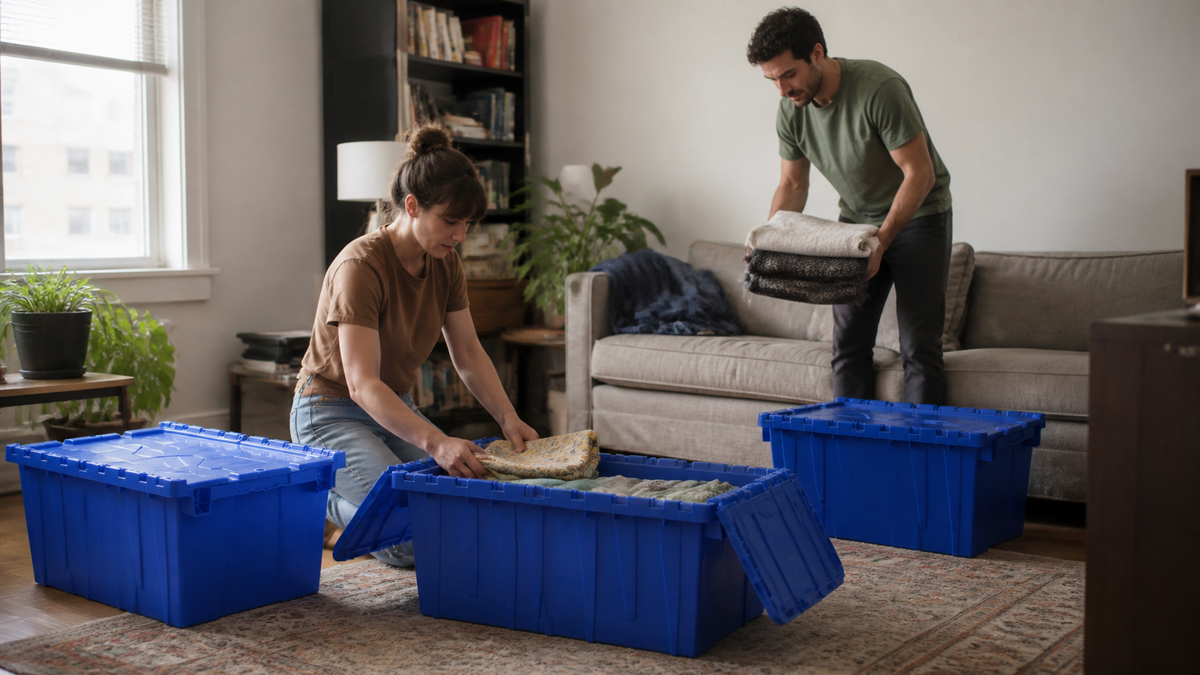
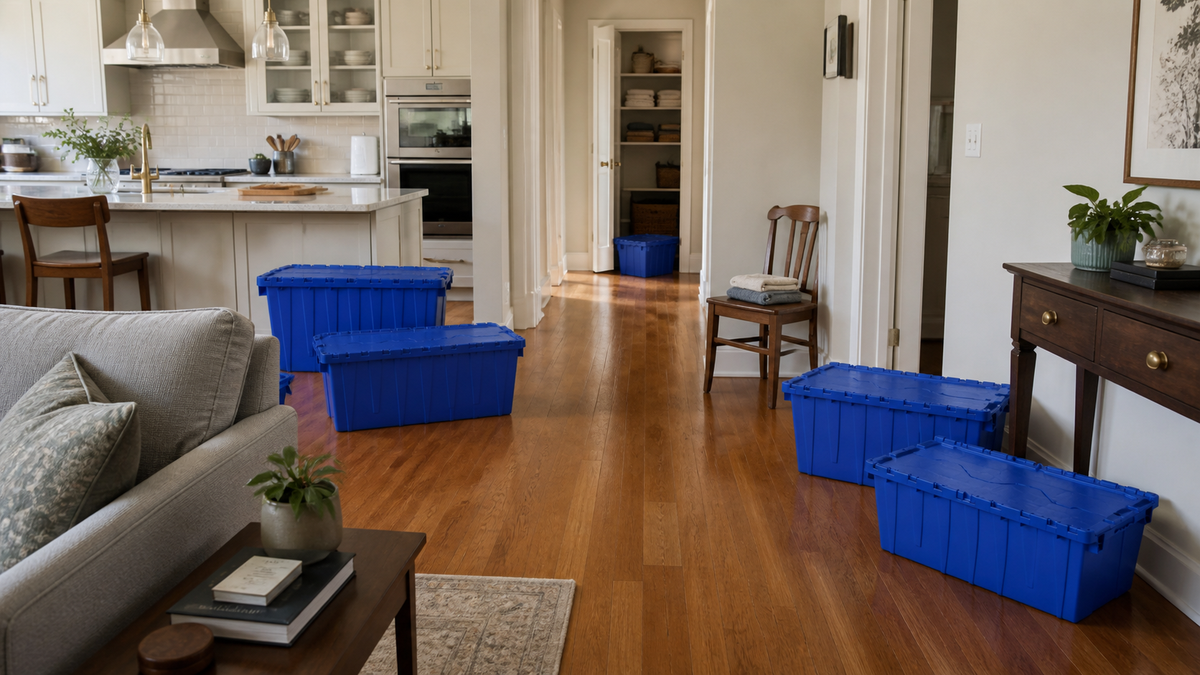
Reusable moving totes can support that system by giving families uniform containers for clearly defined groups. RVATotes delivers clean, sturdy totes before the move and picks them up afterward, so families can focus on organizing instead of finding, assembling, and later cleaning up cardboard boxes.
Begin With the New Space
Before sorting the current home, learn as much as possible about the destination. Measure closets, cabinets, walls, and storage areas. Confirm which furniture will fit comfortably and whether the new residence has any move-in guidelines, elevator reservations, or delivery restrictions.
A simple room plan can make difficult decisions more concrete. Instead of asking whether an item should be kept forever, ask where it will be used or stored in the new home. If there is no clear destination, the item may belong in another category.
When moving into an apartment, smaller home, or assisted living community, confirm what is already provided. There may be less need for duplicate furniture, kitchenware, linens, or maintenance equipment.
Use Four Clear Sorting Categories
The live RVATotes content calendar recommends four practical categories for a senior move: keep, move, donate, and store. Each category answers a different question.
Keep
This group includes belongings the person wants to retain but may not need immediately in the new space. Family keepsakes, seasonal items, and important records may fall into this category while their long-term location is decided.
Move
These are the items with a confirmed place and purpose in the new home. Everyday clothing, favorite books, essential kitchen items, medications, personal documents, and familiar décor may be priorities. Pack this group by room so unpacking is easier.
Donate
Useful items that will not be moving can be given to family, friends, or an appropriate local organization. Confirm donation requirements before packing, since some organizations limit what they accept or require scheduled drop-offs.
Store
Storage can provide time for decisions that do not need to be made immediately. Use it intentionally. Record what is stored, where it is located, and when the family plans to review it again so temporary storage does not become permanent by default.
Work One Area at a Time
Sorting an entire home at once creates too many open decisions. Choose one manageable area, such as a linen closet, bookcase, or single kitchen cabinet. Complete that area before beginning another.
Start with spaces that carry less emotional weight. A utility closet may be easier than a room filled with photographs and family keepsakes. Early progress helps everyone understand the system before moving to more personal belongings.
Use short work sessions and include breaks. A senior move does not need to become a race. A steady pace gives the person moving time to participate, tell stories, and make decisions without feeling pressured.
Keep the Person Moving at the Center
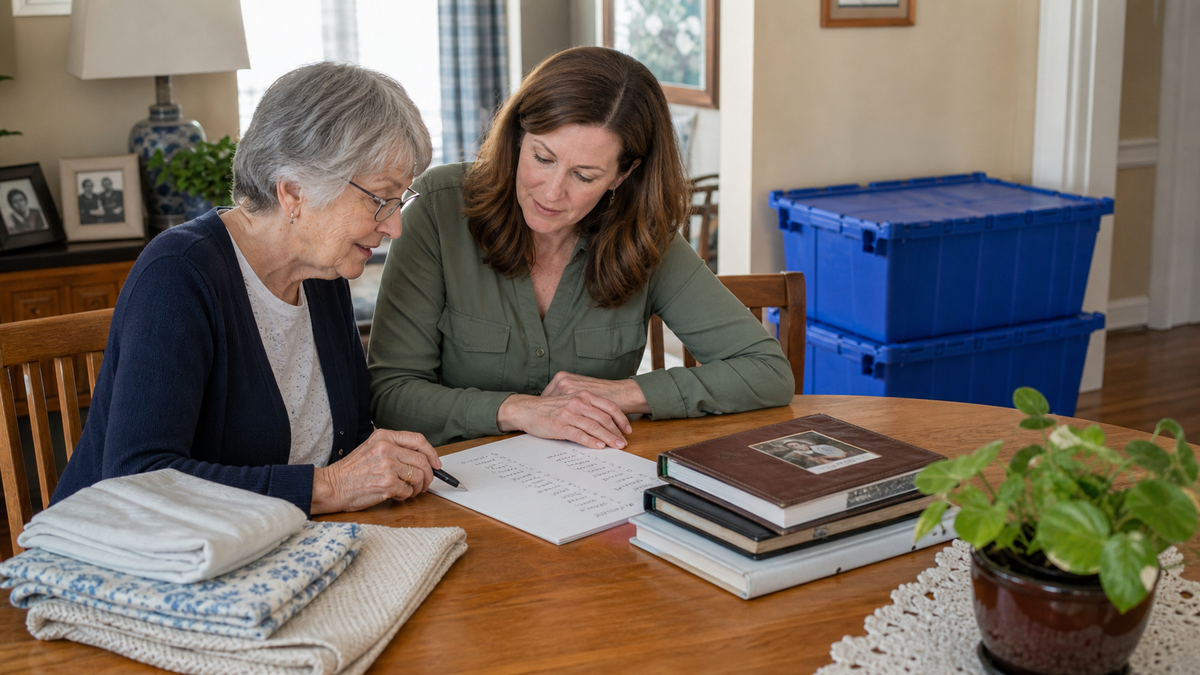
Family support is valuable, but the person moving should remain involved in decisions whenever possible. Ask specific questions instead of making assumptions. “Which three serving dishes do you use most?” is easier to answer than “What do you want to do with the kitchen?”
If several relatives are helping, assign clear roles. One person might maintain the inventory, another may coordinate donations, and another may prepare the new residence. Clear responsibilities reduce duplicate effort and conflicting decisions.
For important documents, valuables, medication, and personal information, follow the family’s established security and care plan. Keep these items separate from general household packing and transport them appropriately.
Label by Destination, Not Just Contents
A label such as “books” describes what is inside but not where the tote should go. A more useful label might be “New Apartment — Living Room — Books.”
Use the same room names on the floor plan, tote labels, and destination signs. Color coding can also help: one color for the bedroom, another for the kitchen, and another for items going to storage.
Avoid placing sensitive personal details on exterior labels. Use a numbered inventory if the family needs a more detailed record of contents.
Prepare a First-Day Group
Set aside the items needed during the first day and night in the new home. This group may include clothing, toiletries, medication, chargers, important documents, bedding, basic kitchen items, and a few familiar objects that make the new space feel comfortable.
Clearly identify this group and keep it accessible. It should not be buried behind items intended for long-term storage or later unpacking.
Plan Enough Time for Packing and Unpacking
The right schedule depends on the size of the home, the number of decisions involved, and how much family help is available. Allow time before moving day for sorting and packing, plus enough time afterward to unpack without rushing.
RVATotes provides reusable moving totes, included dollies, delivery, and pickup. Families pack and move their belongings themselves or hire a moving company separately. RVATotes is not a moving company.
When the move is complete, RVATotes picks up the empty totes, avoiding a leftover pile of cardboard to flatten and manage. Families can review the RVATotes senior-moving service for information about local delivery and pickup in Richmond and surrounding Central Virginia communities.
Make the Move a Series of Manageable Decisions
A senior move becomes more approachable when it is divided into smaller choices. Understand the new space, sort one area at a time, use consistent categories, label everything by destination, and keep essential items accessible.
Most importantly, build a process that respects the person moving and gives the family enough time to make thoughtful decisions together.
Ready to begin planning? Explore RVATotes and organize your move.